

Feroz Khan Was Shot Before He Could Testify. What Happens to the Truth Now?
By Dr Paul Vorster, The Ethics Institute
The shooting of Major-General Feroz Khan before his appearance before the Madlanga Commission raises a fundamental question: can South Africa expect people to tell the truth if it cannot keep them safe?
When Major-General Feroz Khan was shot shortly before he was due to appear before the Madlanga Commission of Inquiry, South Africa was confronted with a question far larger than one witness, one inquiry or one violent attack.
How can a country ask people to speak up if it cannot protect them when they do?
This is now the ethical question at the centre of public accountability in South Africa. We cannot ask people to carry the burden of the public interest while the state fails to carry the burden of their protection.
SAPS has correctly cautioned that it is premature to conclude that the attack on Khan was linked to his anticipated testimony. That caution is important, and due process must be respected.
Even without assuming motive, the timing is devastating. Khan was scheduled to appear before the Madlanga Commission, which is investigating alleged criminality and corruption in the criminal justice system. He was shot before he could testify. That fact alone should alarm every person who cares about the rule of law and ethical governance.
Whether this particular attack was linked to the Madlanga Commission remains to be established. The real question is whether people asked to give evidence in high-risk matters can reasonably believe that the state will protect them.
If the answer is no, then silence becomes rational.
South Africa has spent years encouraging people to speak up. Ethical systems are judged not by whether they encourage disclosure, but by what happens afterwards.
Are they protected? Are risks assessed? Are threats acted upon? Or are people left to stand alone until they are dismissed, threatened, discredited, attacked or assasinated?
A country that cannot protect those who speak up will eventually lose access to the truth. Not because there is no truth, but because the truth becomes too dangerous to tell.
The shooting of Feroz Khan must be understood as more than a policing matter. It is another example of the state falling short in protecting those who act in the public interest.
The Madlanga Commission was established to investigate grave allegations about the possible infiltration of the criminal justice system and the intimidation or targeted removal of whistleblowers and officials resisting criminal influence.
That mandate makes witness protection central to its work. A commission of inquiry is not only a platform for testimony. It is also a high-risk environment where protection cannot be left to hope.
This raises an important accountability question: when a commission of inquiry knows that its work may place people at risk, what duty does it have to ensure that those people are protected?
The legal answer will depend on the facts. The ethical answer is clearer: a commission that depends on truth-telling cannot treat witness safety as somebody else’s administrative problem.
If a commission asks people to speak, it must consider the risks created by that decision. When witnesses are summoned, protection cannot begin only once they enter the hearing room. It must start before they enter the hearing room and continue for as long as the risks remain. Where evidence of threats or organised criminal influence exists, there should be clear processes for assessing risk and referring witnesses for protection. If this happens too late, the commission may still be legally functional, but ethically it is failing.
A commission cannot replace SAPS or the Office for Witness Protection. But it should be able to show, and in fact demand, that witness protection forms part of the architecture of the inquiry, not an afterthought.
In practice, this requires safe reporting channels, early risk assessments, proper referral into protection mechanisms and accountability when protection fails.
It also requires a shift in mindset. The state must stop romanticising the lone whistleblower or heroic witness. Courage is not a control, and bravery is not a governance framework. Anti-corruption systems should never depend on ordinary people sacrificing their safety, careers, families, lives, or futures because institutions failed to build proper safeguards.
If people must become heroes for the truth to emerge, the system is already broken.
South Africa’s whistleblower protection framework has long been criticised as inadequate. Government itself has acknowledged that corruption networks are becoming more sophisticated and that, without strong and credible protection mechanisms, people will be discouraged from coming forward. That is the heart of the matter. People do not stay silent because they do not know right from wrong. Many stay silent because they understand the cost of honesty better than the state does.
This is where ethics becomes a national responsibility.
Whether in an organisation or across society, people must be able to raise concerns without fear. They must believe they will be protected when they act in the public interest. Without that confidence, public accountability becomes theatre. We hold inquiries, publish reports, and wait for the next scandal – or commission of inquiry.
The public interest cannot be protected by commissions alone. It must be protected by systems.
The shooting of Feroz Khan should therefore trigger more than a criminal investigation into the attackers. It should prompt a serious review of how high-risk witnesses are identified and protected when they are called to give evidence.
How will we know the truth if people fear for their lives?
That is the question South Africa must answer now.
A state that cannot protect people who speak up cannot expect the truth to emerge.
The Madlanga Commission may still uncover important facts, and those responsible for the attack on Khan may yet be brought to justice.
But the ethical lesson is already clear.
When people are asked to speak up, protection is not optional. It is the price of asking for the truth.
And when a witness is shot before he can testify, the country should not only ask who pulled the trigger.
It should ask who failed to protect him.
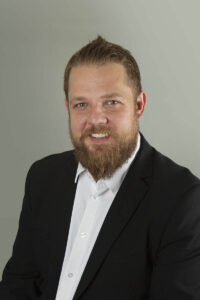
Dr Paul Vorster is the Head of Research Bureau at The Ethics Institute and an Industrial and Organisational Psychologist. He has spent more than a decade helping organisations strengthen ethical culture and has worked with organisations in South Africa and internationally on ethics and governance.