
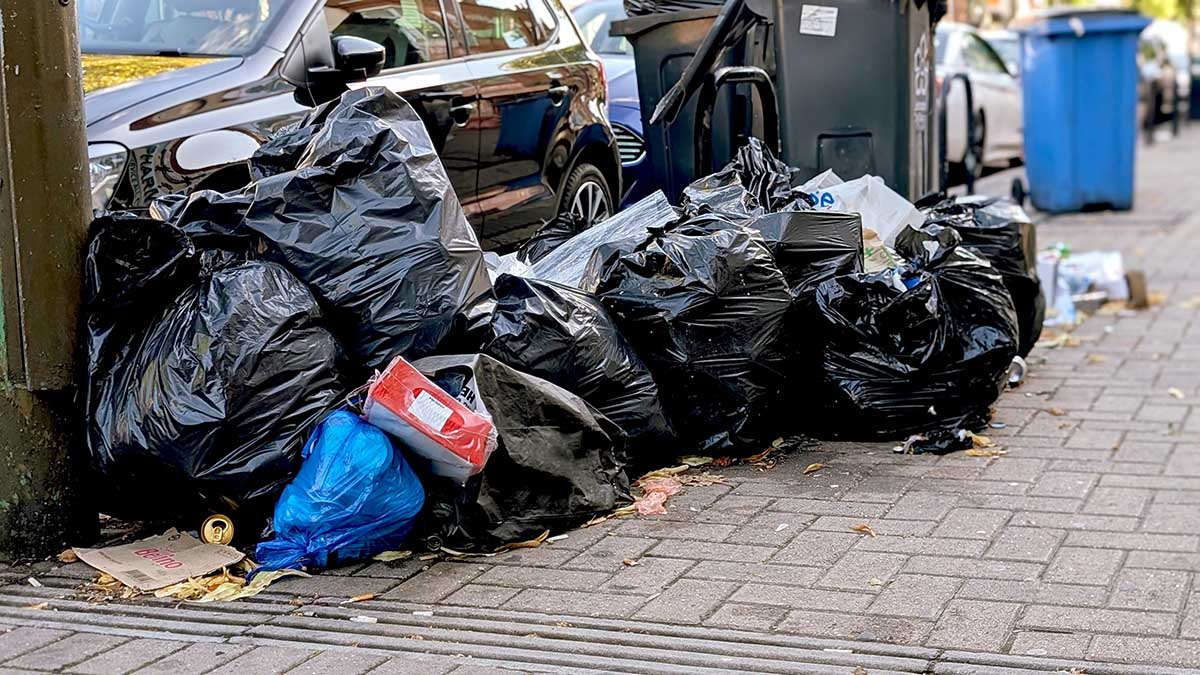
Clean for the G20 Summit, dirty for the People? A test of our collective responsibility.
Across African countries, and maybe in other geographies I am less familiar with, in the lead-up to major international events, host cities are often subjected to a deep transformation process. Streets are cleaned, infrastructure is repaired, and public spaces are restored to a standard that reflects national pride. We witnessed this in Johannesburg ahead of the 2025 G20 conference. The city looked different—cleaner, more orderly, more functional. Neither effort nor budget was spared for this endeavour.
For many residents, however, this transformation sparked frustration rather than pride.
Some of the most common comments heard in conversations, on the radio, and in other public spaces were:
“So, the municipality/government can do it? Why is it only now that they are doing it?”
“So, for the G20 they do have the budget?”
“Oh! So there is capacity?”
“So, why don’t they maintain this standard all the time?”
At face value, these are reasonable and fair questions. They reflect a perception that residents are neglected and not prioritised in budget and capacity allocation. But they may also point to a deeper misunderstanding of the nature of public governance and, more importantly, of ethics.
The narrative that it is simply a question of capacity versus will is too simplistic to explain the situation. We may need to delve into a deeper analysis of agency, responsibility, and accountability as principles of responsible citizenship.
The dominant narrative assumes that the issue is simply one of political will or resource allocation. If the city can clean up for a global event, then surely it can do so consistently. The problem with this perspective is that it places the entire burden of responsibility on the municipality. It simplifies the problem by framing it as a one-dimensional state failure.
However, we must acknowledge that cities are not maintained by governments in isolation. They are co-produced environments, where both government and citizens play defining roles. City environments are shaped daily by the behaviours, decisions, and habits of the people who live in them.
The simplified framing of political will versus capacity overlooks a critical variable: citizen behaviour. The sustainability of a clean and functional city is not determined solely by how often streets are cleaned, but by how often they are made dirty again. Littering, illegal dumping, vandalism, and general disregard for shared spaces significantly undermine municipal efforts. Even the most well-resourced cleaning systems cannot keep up if public behaviour consistently works against them.
In this context, the temporary success observed during the G20 preparations is not necessarily evidence of hidden capacity. Rather, it reflects a short-term, high-intensity intervention—one that is not designed to counteract ongoing, widespread behaviours that degrade the urban environment. The reality is simple: no city can be cleaned faster than it is being dirtied.
This is where ethics and the question of agency come in. At its core, the issue of urban cleanliness is not only about service delivery; it is fundamentally about behaviour and ethical responsibility.
Ethics is often misunderstood as something that applies primarily to institutions: governments, corporations, or leadership structures. But ethical systems are sustained, or undermined, by everyday behaviour. When individuals dispose of waste irresponsibly and ignore basic civic responsibilities, often assuming it is someone else’s responsibility and saying that “someone else” will fix public problems, they contribute to a collective ethical deficit. This is not merely a failure of compliance it is a failure of agency.
Agency refers to the recognition that one’s actions matter, that everyone has a role in shaping outcomes. It requires individuals to understand the consequences of their actions and take responsibility for them. When citizens disengage from this responsibility, they reinforce a system in which problems persist, and accountability is externalised.
This generates a culture of externalised blame, a defining feature of weak ethical environments. In such environments, there is a strong tendency to place responsibility exclusively outside oneself. Individuals see themselves as “victims” of their situation rather than active participants in it. In the specific case of Johannesburg’s readiness for the G20 and ongoing cleanliness, the narrative often becomes: “The municipality is failing”, “The government does not care”, “There is no accountability”.
Once more, I am not suggesting these concerns are invalid; they may have merit. However, they are incomplete. They overlook the extent to which public behaviour contributes to the very conditions being criticised, creating a cycle in which citizens disengage from responsibility, public spaces deteriorate, and blame is directed solely at institutions, with little personal accountability.
This is a difficult cycle to break because it is socially reinforced. Complaint becomes the default response, as it is easier than contribution.
The G20 clean-up, rather than proving that the municipality is unwilling to maintain cleanliness, reveals something more nuanced. It reveals that intensive interventions can temporarily override systemic issues. However, these visible improvements do not reflect sustainable conditions and highlight that long-term outcomes depend on both institutional capacity and public behaviour.
In other words, the clean city we observed could have become more than a temporary outcome if the temporary suspension of harmful behavioural patterns were sustained. If citizens’ agency were stronger, and behaviour shifted towards greater accountability, the results could have been more enduring.
If Johannesburg is to maintain higher standards of cleanliness and functionality, the solution cannot rest solely with the municipality. It will require a shift in how responsibility is understood, and recognition that a clean city is co-created, and not simply delivered by the municipality.
Citizens will need to recognise their role in maintaining shared spaces. Communities must reinforce norms of responsible behaviour. Institutions should strengthen enforcement and education. Leadership must promote a culture of ethical accountability.
In summary, ethics begins where blame-shifting ends. The frustration expressed by residents is not misplaced. Citizens want better environments, and they have the right to demand accountability from public institutions. However, this accountability cannot be one-directional. Until individuals begin to see themselves as active participants in shaping that environment, rather than passive recipients of municipal services, the cycle will continue.
The G20 clean-up demonstrated that the city can be restored. The real challenge is not one of capacity, but of accountability – extending beyond local government to the standards citizens are willing to accept, and the responsibility they they choose to assume.
The challenge is not only a matter of governance failure; it is also a reflection of our collective ethics.

Jovita Matos Fazenda is an Ethics Subject Matter Expert and Head of the International Bureau at The Ethics Institute. A lawyer with over 20 years experience, she works in ethics and organisational integrity across Africa.